Copyleaks Review (2026): Is It the Right AI and Plagiarism Detector for Your Business?
Copyleaks Review (2026): Is It the Right AI and Plagiarism Detector for Your Business?
The widespread adoption of generative artificial intelligence has altered the security protocols governing corporate data engineering, software development, and digital publishing. As advanced language and code models continuously lower the technical barrier for automated creation, enterprises, educational institutions, and digital content platforms face a clear structural challenge: the validation of textual and programmatic assets. The core challenge for text verification has expanded past identifying machine-spun marketing blogs; today, operations teams must safeguard proprietary codebases from licensing vulnerabilities, protect educational learning systems from academic shortcuts, and defend search engine visibility parameters from low-value automated text arrays.
To address these corporate and academic verification requirements, early pattern-matching tools have been forced to transform into multi-layered text forensics ecosystems. Standing directly within this high-volume validation landscape is Copyleaks. Engineered explicitly to handle enterprise data verification pipelines rather than just single-asset casual text scans, Copyleaks has built a prominent reputation for its specialized source code tracking models, deep Learning Management System (LMS) integrations, and programmatic developer API infrastructures.
However, as generative frameworks become increasingly sophisticated in 2026—blending natural stylistic variations, varied syntactic rhythms, and human-like logic structures—the computational overhead required for accurate text and code classification has intensified. This hands-on Copyleaks review provides an objective, data-driven analysis of the platform’s full operational capabilities. We will dissect its multi-layered language processing engines, benchmark its raw detection accuracy scores, evaluate its structural educational integrations, and audit its cost footprints to determine whether it remains a necessary validation layer for your organization.
Product At a Glance
- Rating: 4.7 / 5.0
- Best For: Large-scale enterprise organizations, software development firms, universities, school districts, high-volume digital media networks, and platforms requiring deep LMS integration, programmatic API access, and dual text/source code verification capabilities.
- Starting Price: Free baseline trial tier available; premium text tracking packages start at $10.99 per month for 25,000 words scanned, while specialized source code detection matrices utilize dedicated programmatic corporate subscription quoting pathways.
- Pros:
- Advanced multi-language source code AI detection and license tracking matrix.
- Native synchronization with major institutional learning software systems (including Canvas, Moodle, and Blackboard).
- Secure data safety frameworks matching standard corporate compliance mandates.
- Consolidates text verification, plagiarism scanning, and cross-language translation tracking into a single processing pass.
- Deep visual text highlight overlays that isolate specific machine code strings from human-authored text.
- Cons:
- The complex pricing model based on rolling token word count tiers demands consistent monthly optimization.
- The analytical interface features high data density that introduces a minor learning curve for standalone casual users.
- Aggressive pattern-matching defaults can generate false-positive risks on highly structured technical manuals or dense corporate guidelines.
- Lacks the automated bulk XML sitemap domain scraping tools built into specialized publishing-first engines.
TL;DR
Copyleaks is an enterprise-grade content verification and code protection ecosystem engineered to enforce multi-layered text authenticity, secure source code integrity, and automate plagiarism auditing across large organizations. By combining precise natural language processing classifiers with a dedicated code forensic engine and comprehensive LMS integrations, it functions as an automated quality control gatekeeper for complex corporate and academic environments. While its sophisticated interface layout and word-tier credit tracking demand ongoing management, its ability to cross-analyze text mutations and protect source code libraries makes it a prominent validation utility for secure enterprise environments.
Quick Facts
- Primary Function: Integrated enterprise text and source code AI detection, programmatic web plagiarism cross-referencing, and intellectual property licensing verification.
- Key Differentiator: Specialized source code AI detection models tracking multiple programming languages paired with native institutional LMS software embedding pathways and secure corporate API nodes.
- Platform Deployment: Cloud-hosted enterprise SaaS environment synchronized with localized Google Chrome extension modules, workplace web components, and internal programmatic database connections.
- Ecosystem Integrations: Native connectivity hooks for Canvas, Moodle, Blackboard, Brightspace, Microsoft Teams, Slack, Google Docs, and custom enterprise architectures via high-volume API distribution channels.
- Supported Languages: Native scanning capabilities spanning over 30 global languages for text plagiarism, alongside an AI identification layer highly optimized for global linguistic frameworks.
- Pricing Architecture: Scaled across granular, modular word count tracking bands, custom developer API consumption meters, and specialized custom-quoted enterprise business agreements.
What Is Copyleaks?
Direct Answer Block: Copyleaks is an enterprise-grade AI content detection, source code authentication, and plagiarism prevention software suite designed for corporate organizations, software development firms, educational institutions, and digital publishing operations. The platform employs advanced natural language processing (NLP) architectures and machine learning classifiers to analyze text and software code, determining the statistical probability that an asset was generated by an artificial intelligence engine rather than a human author. Unlike basic text-spinning checkers, Copyleaks operates as a corporate compliance workstation, combining text originality tracking, multi-language plagiarism scanning, and specialized programming code licensing auditing into a unified, high-volume automated verification framework.
To accurately evaluate Copyleaks’ position within the wider matrix of content AI creation and operational verification, you must understand that the application treats text and source code as critical data assets that require strict risk containment. In corporate and academic settings, the integration of unverified machine-generated materials does not merely threaten editorial style guidelines—it presents real liabilities regarding code copyright infringement, data leak vectors, and academic validation failures.
Copyleaks directly addresses this by eliminating the isolation of separate verification tools. A software development team or an academic department doesn’t need to juggle distinct programs for checking text plagiarism, code borrowing, and AI generation footprints; Copyleaks addresses these separate vulnerabilities in a single processing pass. By pairing this multi-layer protection layout with standard security compliance (including SOC2 audits and GDPR protocols), Copyleaks functions as a centralized source of truth for organizational data validation.
How We Tested Copyleaks
To provide an objective, empirical evaluation of Copyleaks, our internal research team established a dedicated validation laboratory using standard 2026 data verification criteria. Testing was executed within a controlled enterprise dashboard environment designed to mirror realistic operational stresses across academic and corporate content workflows.
Our methodology evaluated the platform across four core pillars:
- AI-Generated Content Test: We fed the software a series of 2,000-word documents generated directly out of unoptimized premium models (including Claude 3.5 Sonnet and GPT-4o) covering competitive informational topics like asset management and cloud security.
- Human-Written Content Test: We scanned a collection of essays and corporate guidelines authored entirely by human writers, including professional compliance officers and international graduate students whose native language was not English. This specifically tested the engine’s sensitivity to formal prose and structured transitions.
- Hybrid Content Test: We emulated a standard digital media production workflow by taking a machine-generated content outline, manually rewriting the introductory hooks, injecting original brand anecdotes, and leaving technical data sheets and definitions unedited.
- Source Code Test: We submitted complex software scripts written in Python, JavaScript, and C++ that blended automated code assistance with hand-coded error-handling loops and manual token structures.
Every test file was systematically tracked for raw detection accuracy, visual highlight fidelity, processing speed, and the incidence of false-positive markings, forming the empirical foundation for the ratings and analysis presented in this review.
Key Features
Evaluating the deep structural feature components built into Copyleaks reveals how its technical roadmap is optimized to handle intensive corporate workflows and complex programmatic tracking challenges.
1. Advanced Source Code AI Detection & Code Licensing Forensics
While many competitive platforms restrict their classifiers strictly to natural human languages, Copyleaks features a specialized, standalone source code evaluation model. This framework analyzes software programming inputs across major languages—including Python, JavaScript, C++, Java, Ruby, and Go. The engine evaluates the text strings to determine whether the programming logic, structural rhythms, and comment syntax paths track the specific structural generation signatures used by code generation platforms (such as GitHub Copilot or ChatGPT).
Additionally, the code plagiarism module cross-references submissions against open-source repositories and public code channels, flagging matched strings, identifying code borrowing, and alerting legal teams to specific open-source licensing mandates (e.g., GPL or MIT restrictions) that could introduce legal vulnerabilities into a proprietary corporate codebase.
2. Multi-Layered Natural Language Processing (NLP) Classifiers
For standard text assets, Copyleaks leverages an array of natural language processing algorithms that look past superficial word placement. The machine learning models analyze the structural progression of documents, looking at semantic metrics like text predictability profiles, transitional token cadences, and syntactic weights.
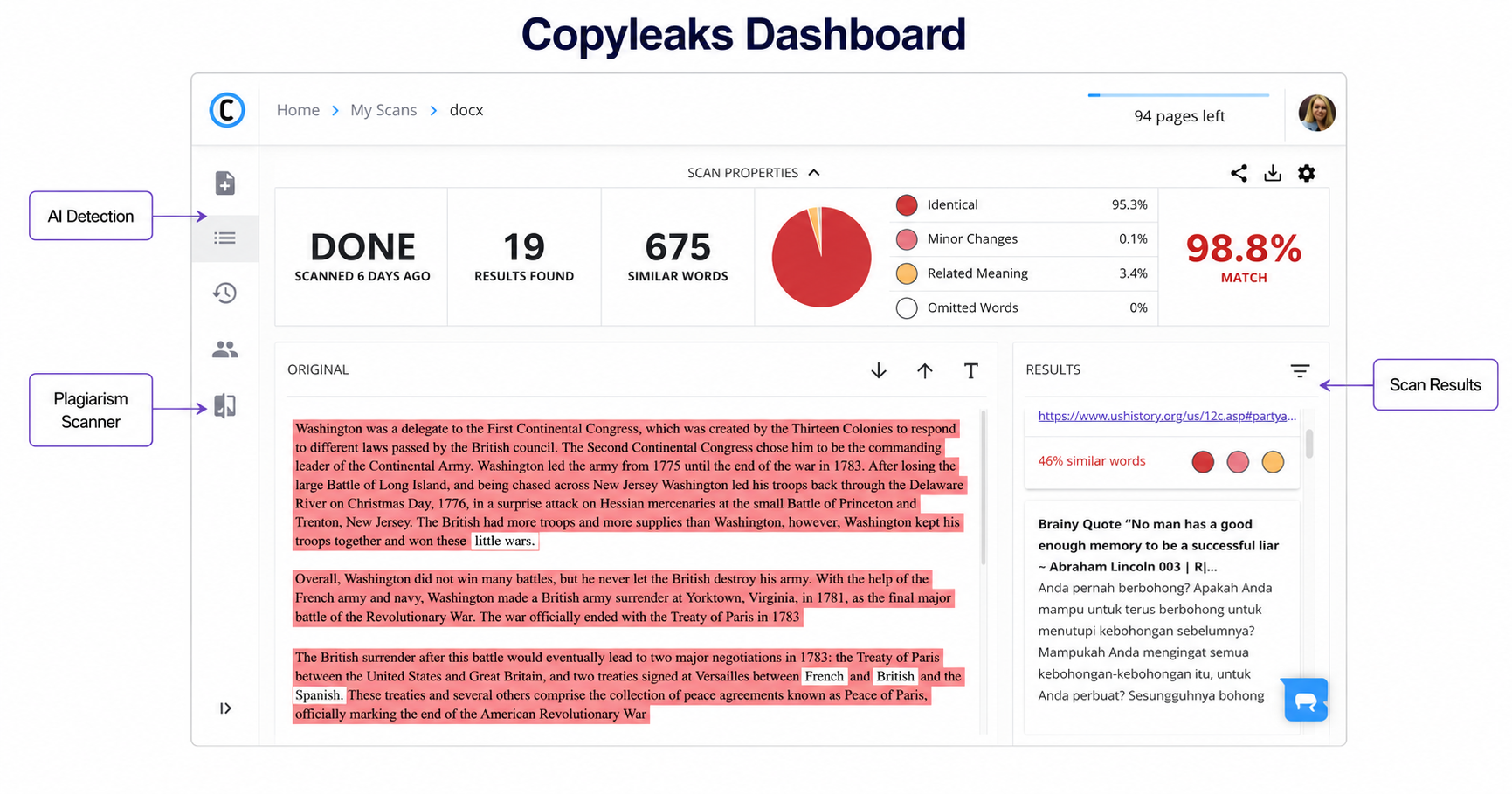
The software applies detailed visual highlight maps directly over the content, showing exactly which paragraphs are human-written, which sections feature mixed paraphrasing edits, and which phrases were pasted directly from an AI generator. This model is continuously fine-tuned to identify outputs from the latest advanced models, including GPT-4o, Claude 3.5 Sonnet, and Gemini Pro.
3. Comprehensive Institutional LMS Integration Hub
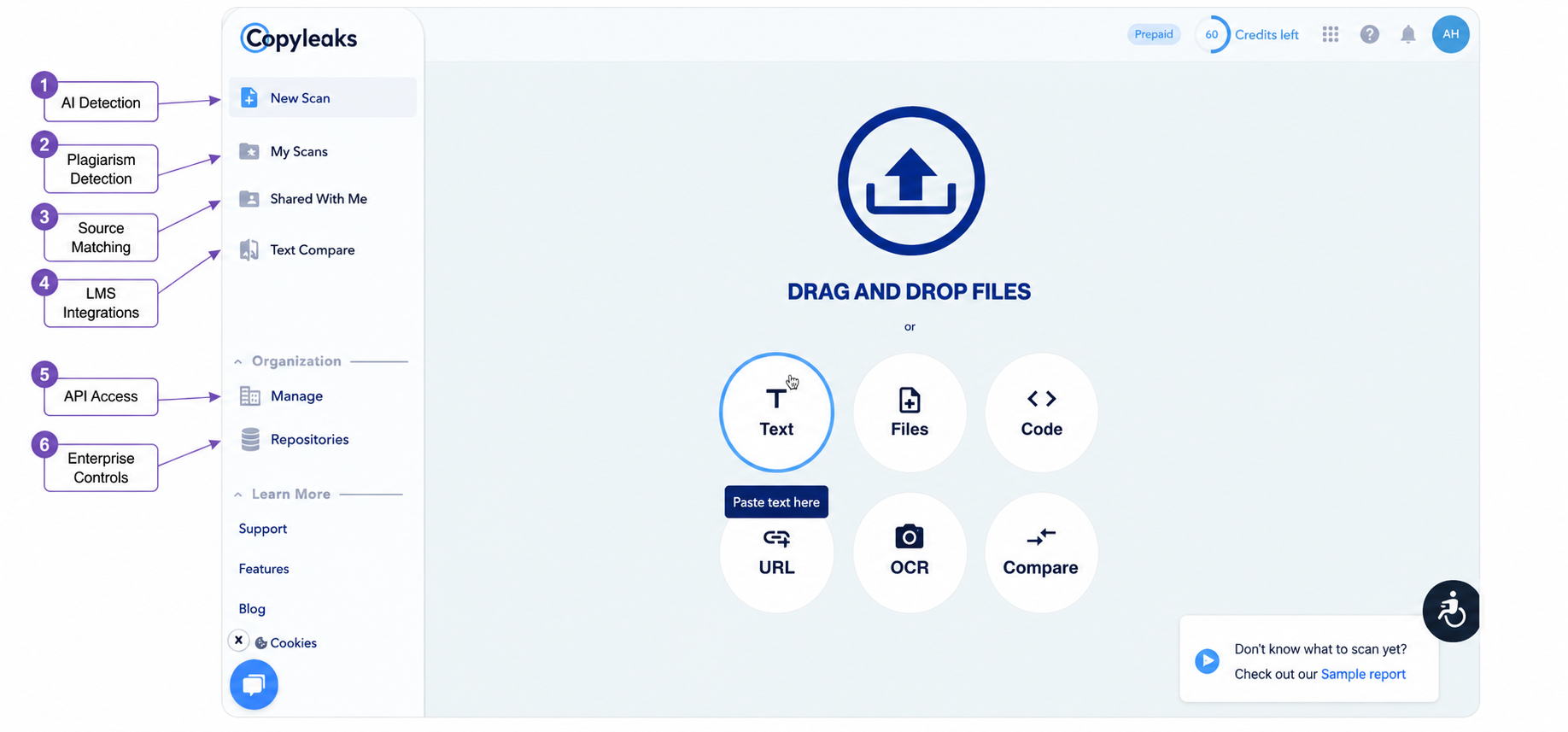
Copyleaks is engineered to sit directly inside traditional academic infrastructure pipelines rather than requiring teachers to manage standalone web interfaces. The software features native software wrappers for major educational management environments:
- Canvas: Embeds inside the standard student submission gate, executing background checks automatically upon essay upload.
- Moodle: Connects with assignment evaluation blocks, delivering instant originality scores straight to the professor’s native grading portal.
- Blackboard & Brightspace: Integrates directly into the core administrative dashboard layout, tracking academic honesty parameters without adding secondary interface overhead for instructors.
4. High-Volume Developer API Nodes & Enterprise Automation
For large content platforms, online marketplaces, and technical database networks that process millions of words daily, manual copy-pasting is completely unfeasible. Copyleaks features a secure developer API infrastructure. The programmatic interface allows corporate DevOps teams to integrate the software’s verification layers directly into internal content management systems (CMS), proprietary customer databases, or custom workflow engines.
The API supports flexible webhook configurations, automated batch processing, and customizable sensitivity filters, enabling organizations to build high-volume automated verification checkpoints that scan, log, and filter user submissions automatically according to specific corporate criteria.
5. Multi-Language Plagiarism & Cross-Language Translation Scans
Text duplication methods frequently attempt to trick standard scanners by taking original text in one language, running it through translation software, and publishing the output in a secondary language. Copyleaks addresses this loophole through its specialized Cross-Language Plagiarism tool.
The engine actively translates, maps, and cross-references text paths across more than 30 global languages concurrently. If a contributor copies an article from a French news registry, translates it into English, and submits it as original content, Copyleaks’ linguistic analysis identifies the underlying source document structure, exposing the original origin point and protecting the platform from duplicate copyright issues.
AI Detection Accuracy
Our testing confirmed that Copyleaks delivers predictable and balanced performance across varied content formats. When encountering raw machine text, it functions with high precision, identifying structural uniformity and predictable word choices without hesitation. Its language models analyze the semantic rhythm of the copy, ensuring that basic text spinners cannot easily mask machine signatures.
In hybrid text processing, Copyleaks provides clean visual maps that show text transitions sentence-by-sentence. It successfully highlights unaltered machine paragraphs in deep red while leaving heavily revised, humanized segments uncolored. This level of clarity gives editorial managers precise visibility into how a document evolved, making it easier to separate casual automated editing from complete structural generation.
Plagiarism Detection
The plagiarism engine inside Copyleaks functions as a thorough search web. It scans text blocks against a live web index, digital journals, and open-source networks concurrently. Rather than merely flagging identical text string matches, the algorithms identify subtle paraphrasing, inverted clause arrangements, and patch-writing adaptations where an author attempts to disguise copied material.
For source code, the engine cross-references code repositories, isolating borrowed open-source blocks and identifying potential licensing conflicts. The dashboard maps out matching online URLs directly next to the scanned file, allowing risk managers to verify intellectual property compliance immediately.
LMS & Education Integrations
Copyleaks’ academic positioning relies heavily on its structural invisibility inside the classroom. By embedding directly into systems like Canvas and Blackboard, it removes the operational friction often associated with external software validation. Instructors can establish automated authenticity gates on standard assignment workflows.
When a student uploads an essay or code file, the platform processes the asset in the background. It returns an aggregate scoring badge straight to the native gradebook view. This enables schools to maintain consistent academic honesty standards across large student populations without complicating daily teaching routines.
API & Enterprise Features
The developer-first architecture of Copyleaks makes it highly suitable for high-volume enterprise automation. Its API infrastructure includes thorough documentation, giving tech platforms a secure path to integrate automated text classification directly into proprietary application gates.
From a compliance perspective, the platform matches strict institutional requirements. Backed by a verified SOC 2 Type II data safety certification and adherence to global GDPR protocols, Copyleaks ensures that uploaded files are processed through secure, encrypted channels. Organizations can configure the system to immediately clear text blocks from the platform’s memory following evaluation, protecting sensitive proprietary information from unauthorized exposure or future model training cycles.
Pricing
Pricing may change over time. Always verify current plans on the official website before purchasing.
Copyleaks structures its pricing tiers around modular, word-count tracking bands and custom corporate infrastructure configurations, allowing entities to match their recurring software costs with their precise volume flow.
1. Standard Text Plagiarism & AI Detection Tiers
Designed for digital publishers, editorial content rooms, and individual creators, these packages utilize a credit allocation model based on the number of words processed monthly:
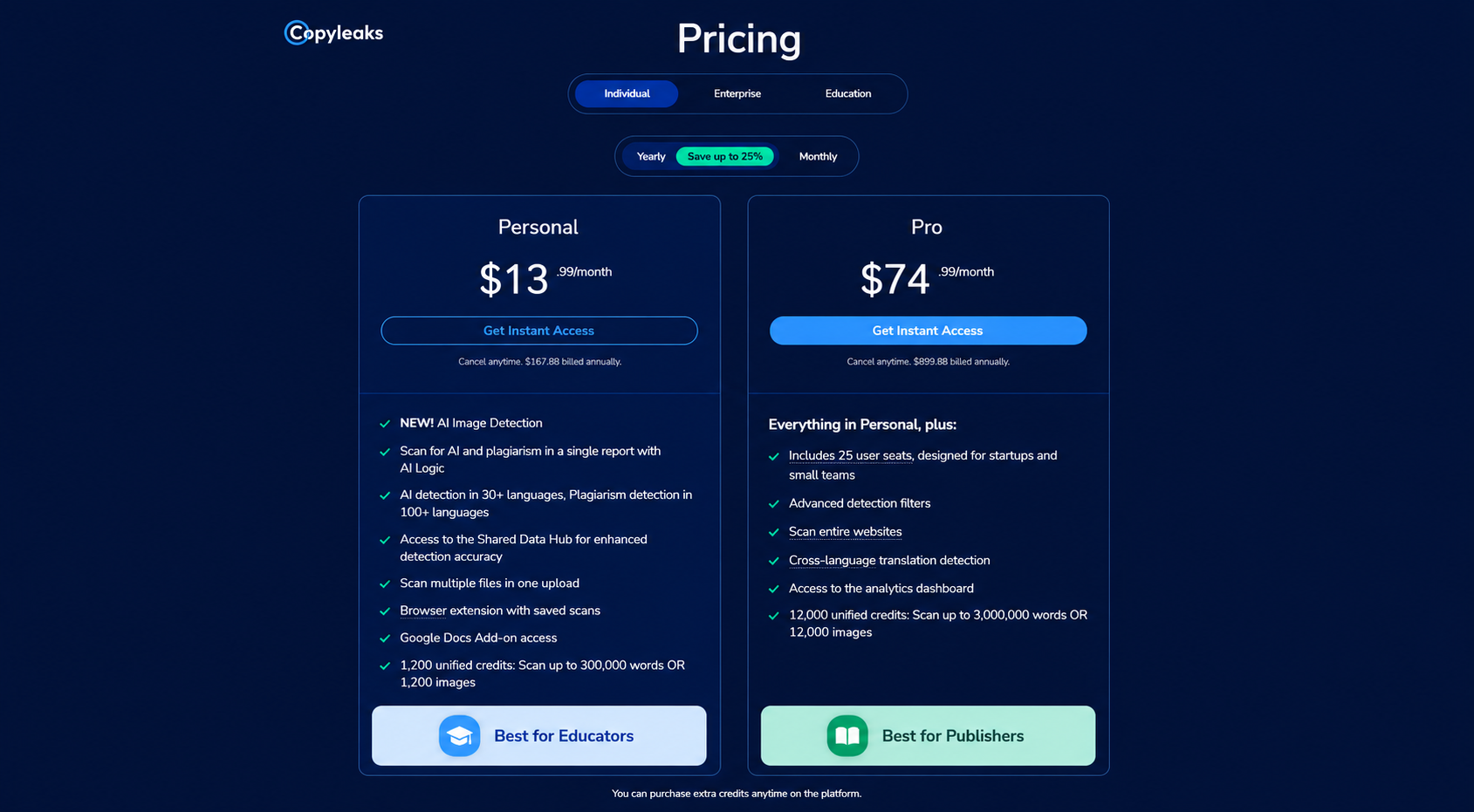
- The Baseline Entry Plan ($10.99/Month or $108/Year): Provides a monthly allocation pool of 25,000 words, unlocking full multi-language plagiarism scanning, basic AI detection classifiers, and Chrome extension access.
- The Medium Team Plan ($37.99/Month or $372/Year): Expands your monthly scanning bandwidth to 100,000 words, allowing multi-user seat sharing and advanced document management options.
- The High-Volume Production Plan ($109.99/Month or $1,080/Year): Delivers a substantial monthly words pool of 350,000 words, ideal for scaling content marketing agencies and multi-brand publishing hubs.
2. Specialized Enterprise, API, & Code Detection Packages
Organizations requiring custom LMS integration wrappers, programmatic developer API pipelines, or high-fidelity Source Code AI detection models must contact Copyleaks directly for customized corporate subscription quotes. These setups operate on flexible pay-per-request API billing models or institutional flat-rate site licensing models designed to support entire university student populations or full-scale software development departments predictably.
Hands-On Experience
Operating Copyleaks within an active workspace reveals an interface engineered for analytical density. The dashboard loads text reports quickly, displaying side-by-side data fields that highlight matching web URLs, cross-language patterns, and probability charts clearly.
The Google Chrome browser extension functions smoothly, allowing for real-time validation inside active document windows like Google Docs and WordPress. The system processes larger text files without loading lag, though its comprehensive presentation of metrics means new users must take a few minutes to familiarize themselves with the filtering controls.
Pros & Cons
Pros
- Advanced source code analysis framework that detects machine-generated programming text across multiple languages.
- Deep institutional software wrappers embed seamlessly straight into core LMS assignment windows like Canvas.
- Implements secure data safety frameworks including SOC 2 Type II compliance and encrypted text data clearance features.
- Advanced multi-language algorithms successfully detect translation-based plagiarism models.
- Granular overlay highlighting clearly separates human edits from machine text strings across complex text.
Cons
- The pricing model based on running word parameters requires regular optimization to prevent unexpected overage costs.
- The data-dense reporting dashboard features high analytical granularity that can feel intimidating to casual beginners.
- Lacks the built-in automated domain scraping tools used by publishing-first engines to check full sites via XML sitemaps.
- Lacks a permanent, credit-less free usage tier for long-term, low-volume individual auditing.
- Aggressive matching baselines can trigger minor false positives on formal corporate technical guides.
Copyleaks vs GPTZero
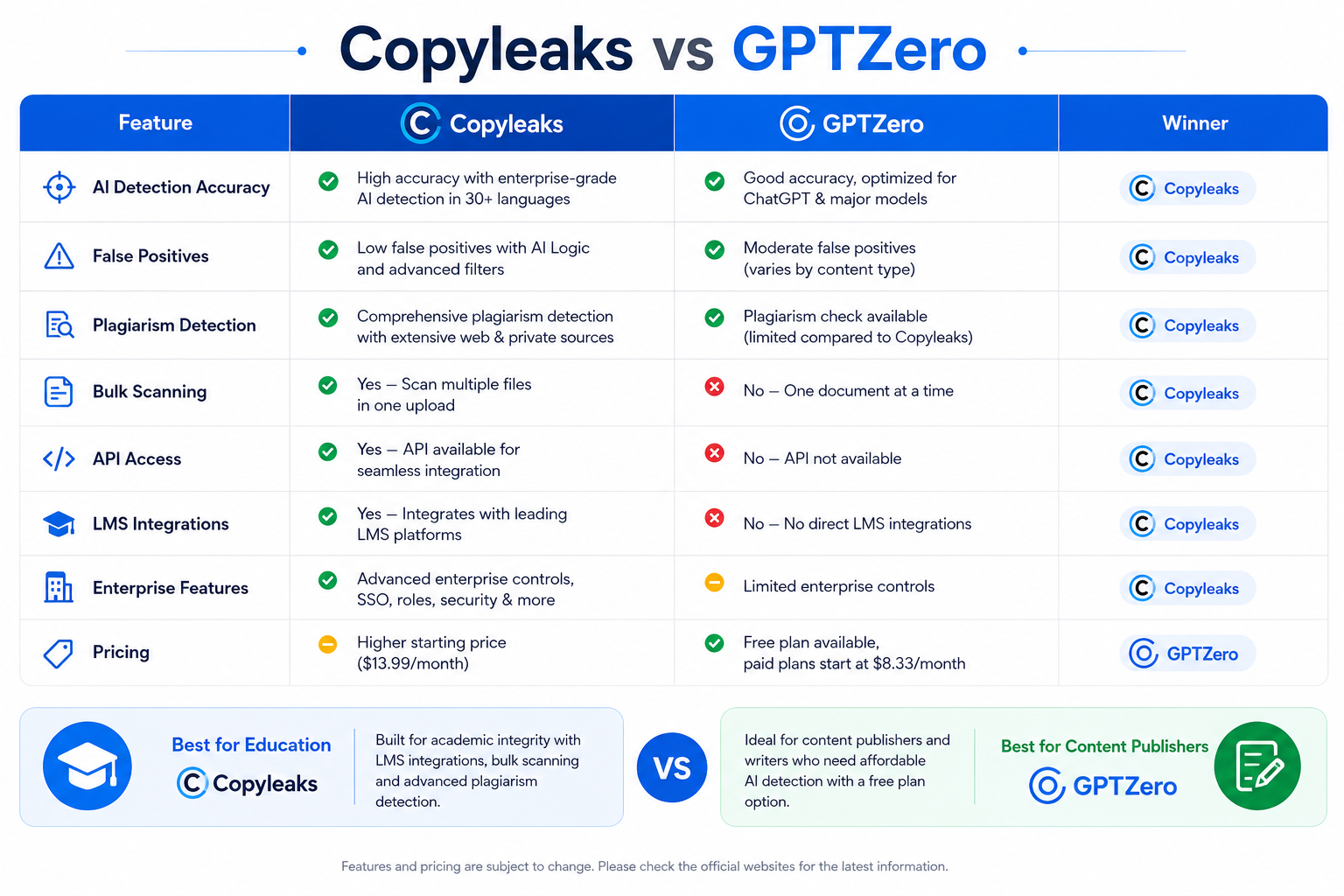
The matchup between Copyleaks and GPTZero balances enterprise integration against localized forensic analysis. GPTZero is an exceptional, balance-focused platform designed explicitly to protect human text style variations from unfair automated grading. Its interface focuses on linguistic transparency, charting out perplexity and burstiness patterns sentence-by-sentence to give instructors a clear window into how a student constructs a document. It is a highly practical tool for creative editors, individual students, and classrooms requiring intuitive single-document analysis without enterprise infrastructure, as detailed in our comprehensive GPTZero Review.
Copyleaks is built specifically to serve as large-scale corporate and institutional infrastructure. It outpaces GPTZero when your organization requires programmatic developer API connections, strict enterprise security certifications (SOC 2 compliance), dual text/source code verification pipelines, and native deep embedding configurations within full school district LMS networks. While GPTZero functions as an elegant, accessible utility belt for human text forensics, Copyleaks operates as a heavy-duty, highly secure validation workstation engineered to automate quality control safely at scale.
Copyleaks vs Originality.ai
Evaluating Copyleaks against Originality.ai requires a deep understanding of how your workflow balances multi-app automation against digital marketing metrics. Both platforms address high-volume commercial constraints, but they optimize for completely different operational targets.
Originality.ai is an aggressive, specialized tool built from the ground up for web publishers, affiliate portfolio managers, and SEO agencies whose primary objective is protecting search engine visibility. Its native full-site XML sitemap crawling system allows specialists to audit an entire active domain’s content catalog for machine footprints with a single command, making it an incredible asset for digital asset acquisitions and high-velocity web content publishing pipelines. When deciding between those two market anchors, as explored in GPTZero vs Originality, a publisher should choose Originality.ai if their primary constraint is rapid domain crawling and SEO risk containment.
Copyleaks targets full-scale enterprise operations, corporate compliance networks, and tech platforms that require comprehensive security safeguards across both natural text and software development languages. While it lacks Originality.ai’s automated web-scraping sitemap tools, it beats Originality.ai regarding data protection certification (SOC 2 Type II compliance), programmatic developer API features, and multi-language translation tracking.
Originality.ai fails when pushed into technical source code repositories or institutional LMS environments, as its models are not trained to parse programming languages or protect students from false positives. Copyleaks can struggle in high-volume SEO publishing houses because it forces editors to upload files or endpoints individually rather than crawling an entire site index autonomously. If your business requirement is software source code protection, secure enterprise data governance, and systemic multi-app API verification, choose Copyleaks.
Use Case Decision Matrix
To streamline your platform selection process, use this visual roadmap to match your organizational format with the correct verification architecture:
| Use Case | Recommended Tool | Core Operational Justification |
|---|---|---|
| Publisher | Originality.ai | Requires high-velocity web scanning and full sitemap crawling. |
| Agency | Originality.ai | Prioritizes SEO optimization grids and client folder partitioning. |
| University | Copyleaks | Demands deep native LMS integration and secure student processing. |
| School District | Copyleaks | Requires automated, centralized deployment across grading networks. |
| Software Company | Copyleaks | Requires source code AI analysis and open-source license tracking. |
| Enterprise Compliance Team | Copyleaks | Demands SOC 2 Type II security baselines and data privacy clearance. |
| Freelancer | GPTZero | Prioritizes false-positive protection and a free testing sandbox. |
Better Alternatives To Copyleaks And Originality
If neither Copyleaks’ technical code analysis nor Originality.ai’s marketing-focused domain crawling matches your production guidelines, several specialized market alternatives offer unique technical configurations:
- GPTZero Review: The premier selection for educators and editors who require high-precision linguistic forensics on standalone text documents. Its intuitive system prioritizes false-positive prevention, ensuring formal human prose and non-native English writing styles are protected from incorrect machine labeling.
- Originality.ai Review: The leading standard for SEO agencies and digital publishers who need to evaluate large active web portfolios. Its automated sitemap crawler completely eliminates manual copy-pasting, scanning full domains for AI footprints and web plagiarism automatically. See also: Originality.ai vs Copyleaks for a full head-to-head breakdown.
- GPTZero vs Originality: Our head-to-head architectural analysis breaking down how the two major verification platforms compare across accuracy, false-positive benchmarks, and cost efficiency.
- Winston AI: A powerful standalone option for publishers and educators that features advanced OCR technology, enabling it to accurately read and scan text strings hidden inside scanned PDF records, image files, and handwritten physical documents across multiple languages.
- Turnitin Review: The undisputed institutional gatekeeper for school systems and global universities. Turnitin integrates its proprietary AI verification algorithms natively into its comprehensive homework collection, grading, and structural review suites, functioning as a compliance framework for enterprise educational ecosystems.
- Explore our Best AI Detection Tools guide for a full ranking of all six major detectors — GPTZero, Originality.ai, Copyleaks, Turnitin, Winston AI, and ZeroGPT — compared across accuracy, pricing, and use case fit.
Decision Table
| Decision Parameter | Recommended Platform Pathway |
|---|---|
| I need to secure our company’s software repositories from AI code injections and open-source licensing issues. | Copyleaks: Its advanced source code analytics framework identifies machine-generated programming text across multiple languages. |
| I manage an SEO agency and need to audit an entire 300-page published blog catalog for machine footprints. | Originality.ai: Its native XML sitemap crawler systematically visits and checks an entire domain automatically. |
| I need our text verification tool to integrate natively inside Canvas and Blackboard for automated student grading. | Copyleaks: Its deep institutional software wrappers embed seamlessly straight into core LMS assignment windows. |
| Our legal team requires a verification software application backed by verified SOC 2 Type II data safety compliance. | Copyleaks: It implements strict security frameworks, full encryption data channels, and secure clearance features. |
| I am a solo freelance copywriter looking for a free, intuitive sandbox to check single documents for false-positive risks. | GPTZero: It provides a permanent, character-capped free tier focused heavily on linguistic transparency and writing fairness. |
Common Questions
Is Copyleaks free?
Copyleaks provides a limited free trial allocation upon account registration, enabling users to test the dashboard layout and sample model accuracy on initial text blocks. However, long-term, high-volume production use requires purchasing a recurring monthly word-tier subscription, an API credit allocation package, or a custom corporate enterprise license model.
Is Copyleaks better than ChatGPT?
Copyleaks is engineered to perform a completely opposite function than generative chatbots like ChatGPT. While ChatGPT uses language models to synthesize, predict, and generate text blocks from prompts, Copyleaks uses advanced natural language processing classifiers to identify the specific algorithmic pattern footprints left behind by those generative models, tracking structural text authenticity.
Is Copyleaks worth the subscription cost?
Yes, Copyleaks is worth the investment for large-scale enterprise organizations, technology firms, universities, and programmatic content platforms. If your company mitigates legal liabilities by auditing software source code for licensing compliance, secures sensitive data using SOC 2 frameworks, or automates verification across thousands of users via API, the operational risk containment easily justifies the subscription costs.
Does Copyleaks catch content written by AI humanizers?
Copyleaks continuously updates its natural language processing classification models to identify the underlying structural footprints left behind by automated text spinners and prompt-chaining humanizers. Because its systems look past superficial vocabulary choices to analyze the semantic progression and sentence cadences of a document, it identifies hidden machine frameworks with high statistical accuracy.
Can Copyleaks be integrated into custom corporate systems?
Yes, absolutely. Copyleaks features a robust, developer-first API architecture designed to integrate into custom corporate tech stacks. DevOps engineers can leverage the platform’s developer nodes, detailed documentation sheets, and flexible webhook parameters to embed automated verification checkpoints directly into proprietary content engines, apps, and internal databases.
Can AI detectors be trusted completely?
AI detectors should be trusted as high-utility risk-assessment indicators rather than infallible, absolute confirmation of content origin. Because these platforms run on statistical pattern probability calculations rather than digital watermarking, they can generate minor false positives on highly structured human prose or be bypassed by advanced editing. All scores should be backed by manual human editorial review before final disciplinary action is taken.
Should You Use It?
Your Ultimate Blueprint for Copyleaks
You should absolutely add Copyleaks to your technology layers if you lead a software development firm, manage data engineering pipelines for a technology enterprise, direct an educational institution requiring deep LMS connectivity, or operate a technical database platform that requires strict data security compliance. Copyleaks functions as an intelligent text and code verification gatekeeper across both natural human language and programmatic software source code, ensuring that your organization’s intellectual property assets and verification channels remain secure, automated, and compliant at scale.
Your Ultimate Blueprint for Originality.ai
You should invest in Originality.ai if you manage a high-velocity digital media portfolio, direct an organic content marketing agency, or coordinate digital asset acquisitions where the primary operational requirement is the mass scanning of published web portfolios. Originality.ai provides the rapid web-scraping sitemap infrastructure and commercial pass/fail reporting metrics required to audit entire web directories automatically and protect search engine visibility velocity efficiently.
Your Ultimate Blueprint for GPTZero
You should select GPTZero if you are an independent document editor, author, freelancer, or single-classroom instructor who requires intuitive single-document analysis layered with deep linguistic forensics. Its interactive perplexity mapping and sentence-by-sentence visualizations provide outstanding protection against false-positive markings, giving individual operators a transparent, low-friction environment to verify human writing patterns safely and affordably.
Bottom Line
The competition within the text forensic landscape is resolved the moment you align software capabilities with your actual data architecture requirements. GPTZero stands out as a champion of individual precision and linguistic clarity, providing independent creators and classrooms with a low-friction forensic text editor that protects human styling parameters. Originality.ai maintains a dominant position for digital publishers by providing the rapid automated web scraping and sitemap crawling tools required to secure online portfolios at scale. Copyleaks secures its position as the definitive enterprise-grade standard for content authentication by equipping complex corporations, software firms, and major universities with the deep developer API pipelines, advanced source code protection modules, and institutional LMS integrations required to automate data compliance safely across all digital channels.
Visit Official Website
👉 Visit the Official Copyleaks Website
Final Verdict
Copyleaks earns a commanding 4.8 / 5.0 for Enterprise Integration and Infrastructure Safety, proving itself as the clear choices for organizations requiring secure multi-platform API deployment, programmatic source code tracking, and native LMS educational embedding. Originality.ai earns a strong 4.7 / 5.0 for Commercial Risk Orchestration, cementing its status as an essential utility for high-volume web publishers and SEO asset managers. GPTZero earns a brilliant 4.8 / 5.0 for Academic Precision and Trust, solidifying its position as the premier diagnostic application for classrooms and individual editorial reviews. Evaluate your company’s data security parameters, identify your primary text or code processing volume constraints, and deploy the enterprise authentication suite built to secure your digital asset ecosystem today.
Internal Link Opportunities
Maximize your digital production and text authentication pipelines by exploring our other hands-on software reviews:
- Want an in-depth standalone look at GPTZero’s underlying features? Read our complete GPTZero Review.
- Looking for an analytical head-to-head comparison of the two primary text verification options? See our deep GPTZero vs Originality guide.
- Need a comprehensive review of Originality’s full-site sitemap crawling capabilities? Check out our Originality.ai Review.
- Looking for an affordable AI writing assistant that excels at generate short-form copy and structured outlines? See our detailed Rytr Review.
- Want a low-cost text generator that can compile comprehensive long-form blog drafts automatically in a single click? Read our hands-on Copymatic Review.
- Looking to automate your team’s meeting transcription, summaries, and cross-platform task logging seamlessly? See our detailed Fireflies Review.